Evaluating the Halloween Brush Stamp for Procreate: A Practical Guide to Spooky Digital Art Tools
Digital illustration offers unparalleled flexibility, yet certain projects demand efficiency without sacrificing artistic integrity. For creators working on seasonal campaigns, social media content, or personal projects during the autumn months, the Halloween Brush Stamp represents a specific category of digital asset designed to bridge the gap between custom illustration and rapid deployment. Unlike standard texture brushes that simulate media like charcoal or watercolor, stamp brushes function as pre-rendered assets that can be placed instantly onto a canvas. Understanding the distinction between these tool types is crucial for artists deciding whether to invest time in drawing elements from scratch or utilizing a curated library.
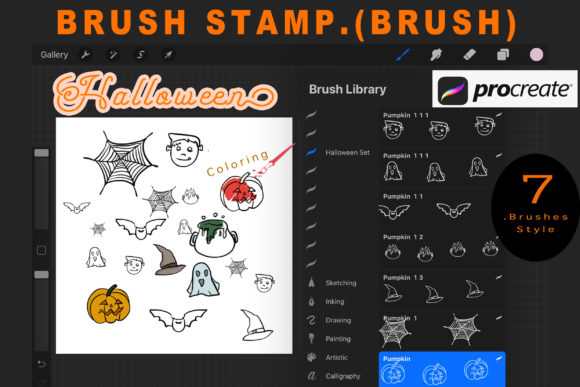
The specific utility of a Happy Halloween Brush Stamp set lies in its ability to standardize thematic elements while allowing for creative variation. When evaluating a tool described as a ".brushset" containing seven distinct styles—such as Pumpkin, Ghost, Frankenstein, Bat, Pot, and Spiderweb—the primary consideration is how these assets integrate into a broader workflow. These are not merely clipart images; when formatted correctly for applications like Procreate, they respond to pressure sensitivity, rotation, and opacity settings, offering a level of dynamism that static image pasting cannot achieve.
Defining the Utility of Thematic Stamp Brushes
To understand the value proposition of a Halloween Brush Stamp, one must first distinguish it from other brush categories available in digital art software. Standard painting brushes are designed for stroke creation, relying on the artist's hand movement to generate form. In contrast, stamp brushes are shape-based. Each tap of the stylus deposits a complete graphic. The advantage here is consistency. If a project requires fifty unique spiderwebs scattered across a background, drawing each by hand ensures variety but consumes significant time. A dedicated stamp brush allows for rapid placement, with the artist focusing on composition rather than execution of repetitive details.
The inclusion of specific archetypes like Frankenstein, Ghost, and Bat within a single set addresses a common pain point in seasonal design: thematic cohesion. Often, artists might source icons from disparate libraries, resulting in a mismatched visual style where line weights, shading techniques, and color palettes clash. A unified brush set ensures that the pumpkin shares the same aesthetic DNA as the spiderweb. This consistency is vital for professional outputs such as greeting cards, party invitations, or branded social media stories where visual harmony reinforces brand identity.
Comparing Stamp Sets to Vector Libraries and Hand-Drawn Assets
When researching resources for Halloween-themed projects, creators typically encounter three main options: purchasing a brush set, subscribing to a vector stock service, or illustrating elements manually. Each approach carries distinct trade-offs regarding flexibility, scalability, and workflow speed.
Vector libraries offer infinite scalability and easy color manipulation. However, importing vectors into raster-based apps like Procreate often requires extra steps, such as converting files or managing complex layer structures. Furthermore, vector shapes can sometimes appear too rigid or "perfect," lacking the organic texture that hand-drawn digital brushes provide. A Halloween Brush Stamp set, conversely, is native to the raster environment. It retains the texture of the original artwork, offering a more tactile, hand-crafted feel that resonates well with audiences seeking authenticity over corporate polish.
Hand-drawing every element remains the gold standard for unique, high-end illustration. It provides total control over every pixel. Yet, for tight deadlines or projects requiring high volumes of decorative elements, this method is often impractical. The decision to use a stamp set should not be viewed as a compromise on quality, but rather a strategic allocation of time. By using a pre-made set for background elements or secondary decorations, an artist can reserve their energy for crafting the primary focal points of the composition.
Workflow Integration and Technical Considerations
The effectiveness of any digital tool is measured by how seamlessly it integrates into the existing creative process. A well-constructed Happy Halloween Brush Stamp file (typically ending in .brushset) is designed for immediate import. Once installed in Procreate, these tools should behave intuitively. Key technical features to evaluate include size jitter, opacity pressure, and scatter.
- Size Jitter: Allows the brush to vary the size of the stamp randomly with each tap, preventing the "stamped" look where every icon appears identical.
- Rotation: Essential for elements like bats or leaves, ensuring they can be oriented naturally without manual adjustment after placement.
- Opacity Pressure: Enables the artist to fade elements into the background or create depth by varying the transparency based on stylus pressure.
If a brush set lacks these dynamic properties, it functions merely as a sticker sheet, limiting its utility. High-quality sets allow the artist to build complex scenes quickly. For instance, creating a haunted forest scene becomes a matter of layering different densities of spiderwebs, scattering bats at varying opacities, and placing pumpkins with randomized rotations to mimic a natural arrangement.
Ideal Use Cases and Limitations
Identifying the right fit for a Halloween Brush Stamp tool depends largely on the project scope. These tools excel in contexts where speed and thematic atmosphere are priorities. They are particularly effective for:
- Social Media Content: Creating engaging stories or posts for Instagram and TikTok where trends move quickly and turnaround time is short.
- Pattern Design: Generating seamless backgrounds for wrapping paper, fabric prints, or digital wallpapers where repetition is key.
- Scrapbooking and Journaling: Adding decorative flair to digital planners or memory books without overwhelming the layout with heavy illustration work.
- Educational Materials: Teachers and content creators can quickly assemble visually appealing worksheets or presentation slides.
However, limitations exist. Because stamp brushes are raster-based, they have a maximum resolution determined by the original artwork. Enlarging a small stamp significantly may result in pixelation, unlike vector graphics which remain crisp at any scale. Additionally, while color adjustments are possible via blending modes (such as Multiply or Overlay), completely recoloring a complex multi-colored stamp (like a detailed Frankenstein monster) can be more labor-intensive than editing a flat vector shape. Artists needing precise, solid-color icons for large-format printing might find traditional vector illustrations more suitable.
Making an Informed Decision
Ultimately, the choice to incorporate a Halloween Brush Stamp set into your library comes down to a balance of efficiency and aesthetic goals. For professionals and hobbyists alike, the value lies in the ability to expand one's visual vocabulary without reinventing the wheel. A set featuring classic motifs like pots, ghosts, and bats provides a reliable foundation upon which unique artistic visions can be built.
When evaluating potential purchases or downloads, consider the versatility of the styles included. Are the lines clean enough for minimalistic designs? Do they possess enough texture for grunge-style artwork? The best tools are those that adapt to your style rather than forcing you to adapt to them. By understanding the specific strengths of stamp brushes compared to vectors and hand-drawn methods, creators can make informed decisions that enhance their productivity while maintaining the high quality expected in modern digital art.
In the fast-paced world of content creation, having a specialized toolkit ready for seasonal shifts is a strategic advantage. A well-curated brush set does not replace artistic skill; rather, it amplifies it, allowing the creator to focus on storytelling and composition while the tool handles the repetitive intricacies of seasonal iconography.